
Main Campus and Health Sciences Campus Student Centers
History and Tradition
From East Carolina’s birth in 1907, the university’s engaged student body has called three different facilities home. Until 1923 students gathered, ate, and visited various support services in the Old Cafeteria Building, one of the campus’s six original buildings. Over the next 50 years the Wright Building, named after East Carolina University’s first president, Robert Herring Wright, served as student’s social, spiritual, and recreational home. Dedicated on February 9, 1974, the Mendenhall Student Center became the university’s largest student facility. Named after Cynthia Anne Mendenhall, the first director of the Student Union (now the Student Activities Board), the 116,000 sq. ft. facility has become a destination point for numerous student centered activities, organizations, and gatherings as well as student services, recreation and program facilities, and various food services.
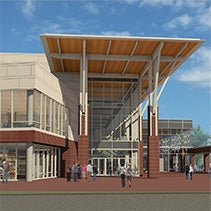
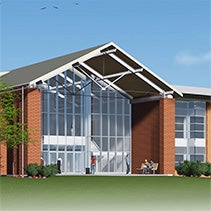
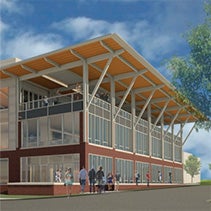
In March of 2013, the East Carolina University Board of Trustees approved a plan to build two state-of-the-art student center facilities on the Main and Health Sciences Campuses. Supported by student fees, building revenue, and on and off campus partners, these two facilities will serve current and future students, faculty, and staff as well as our over 150,000 proud alumni of East Carolina University. Existing as Pirate Nation’s “living room,” both facilities will empower the campus community around our motto Servire and serving as a hub for cultural, educational, social, and recreational activities. The centers will exemplify the university’s mission as the leadership university, committed to student success, public service, and regional transformation.
Vision
Building a welcoming and inclusive community through shared experiences and collaborative educational opportunities with kindness towards every human being.
Mission
We develop and enhance the student experience through programming and state of the art facilities.
Values
- Integrity
- Accountability
- Student centered
- Respect
- Fellowship